
Understanding ROI in Modern Training
Lets talk about VR Simulator ROI: Every company wants training that actually changes performance, not just tick boxes. so, traditional training programs often fail to deliver measurable outcomes.
This is where ROI becomes crucial. It measures how much value a business gains compared to what it spends.
ROI = (Benefits – Cost) ÷ Cost × 100
So if a company spends 10,000 dollars in VR Simulator training and saves 25,000 dollars in reduced training time or fewer errors, its ROI is 150%. That’s not just a theory, it’s what forward thinking businesses are already achieving with VR simulation.
What Makes VR Simulation Different?
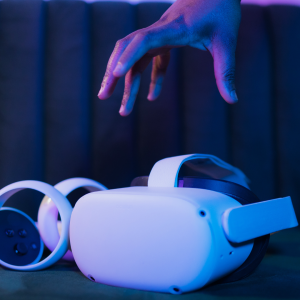
Unlike conventional training methods that depend on manuals or videos, Virtual Reality simulators immerse employees in lifelike environments.Trainees can practice tasks, make mistakes safely, and build confidence all within a controlled virtual setup.
But here’s where the ROI really implements:
Reduced training time
Learners absorb information faster when they experience it.
Lower operational costs
No need to stop production lines or use expensive physical setups.
Improved retention
Interactive learning increases memory retention by over 70%, according to several corporate training studies.
VR Simulator ROI
is not just about saving money, it’s about improving outcomes that directly impact productivity and safety.
How to Measure ROI from VR Simulators?
ROI of a VR simulator involves three steps:
Identify measurable goals
what You want to improve is it training time, accuracy, safety, or performance.
Track before-and-after data
Combine results together to see before and after using VR simulation.
Quantify results in value
Translate improvements into cost savings or revenue growth.
For example:
A company uses a VR simulator to train drivers.First 3 days without VR training, 25% error rate. After 3 days with VR training, 5% error rate.
The company saves time, reduces damage, and improves safety.
The Real Results Businesses Are Seeing
Time Efficiency
VR simulators reduce learning curves by allowing trainees to repeat visuals until mastery without supervision or downtime.
Cost Reduction
Instead of using physical equipment, organizations train virtually. This saves on materials, space, and maintenance.
Better Risk Management
In hazardous industries like oil, aviation, or construction VR lets employees experience real risks safely. That reduces accidents, insurance claims, and operational loss.
Higher Engagement and Retention
Interactive simulations keep users 3x more engaged than traditional e-learning. More engagement, better outcomes.
Data-Driven Improvement
VR systems capture every analytics such as time spent, errors made, and reaction. Managers can track performance and make targeted improvements.
Why VR Simulator ROI Matters in 2025
By 2025, VR simulator is not only a concept, it’s a strategic advantage. Companies are using it to standardize training, scale faster, and cut costs. That means faster onboarding, fewer mistakes, and better returns on every training dollar spent.
The Business Case for Adopting VR Simulation
Every department from HR to operations can benefit from measurable ROI through VR.
Manufacturing
Reduces errors during machine handling.
Healthcare
Enables realistic patient simulations without risk.
Healthcare
Enables realistic patient simulations without risk.
Aviation
Ensures precision and safety during pilot training.
Corporate onboarding
Simplifies orientation across large teams.
When companies use VR training simulators, each session generates performance metrics, helping managers refine training and continuously improve ROI.
ZATSIM’s Approach to Measuring ROI
At ZATSIM, ROI measurement is built into the simulation process. The platform tracks:
Time spent on each module
Error rates and improvement over sessions
Completion rates and confidence levels
These analytics translate directly into quantifiable ROI reports, showing exactly how VR training benefits a business financially and operationally.
It’s not just about proving value it’s about seeing it in action.
Overcoming Common ROI Misconceptions
Some decision makers hesitate to invest in VR training because they assume it’s expensive.
But the numbers tell a different story.
While initial setup may cost more than traditional courses, the long-term savings are massive reduced turnover, shorter training time, and fewer accidents quickly balance the investment. Plus, VR modules are reusable.Once developed, they can train hundreds of employees without extra cost making ROI increase with every use.
The Future of ROI in Immersive Training
The next evolution of ROI measurement will blend AI analytics with VR simulation.
AI will identify performance patterns, predict skill gaps, and personalize training in real time.
This kind of adaptive learning creates even higher returns — as every trainee gets optimized instruction for their individual learning speed. ZATSIM is already integrating AI-driven analytics into its simulators, helping companies turn data into smarter training strategies and stronger ROI outcomes.
Conclusion
VR Simulator ROI is more than a financial metric; it’s proof that immersive learning works.
Companies using VR simulators see faster training, safer workplaces, and better employee performance all of which lead to measurable business growth.
By 2025, the question won’t be “Should we invest in VR training? But how fast can we scale it?
With ZATSIM, that transition is already happening. Contact us now.